C++ Template Specialization
Sometimes, the programmer may decide to implement a special version of a function (or class) for a given set of template type arguments which is called an explicit specialization. The result is a template parameterized on the remaining types. 19.1 template classes previous post 19.1 — template classes. Explicit specialization may be declared in any scope where its primary template may be defined (which may be different from the scope where the primary template is defined; The following code shows the definition of a template.
C++ Template Specialization - Generic programming is an approach to programming where generic types are used as parameters in algorithms to work for a variety of data types.in c++, a template is a straightforward yet effective tool. If the enclosing template is instantiated, the declaration of each member partial specialization is instantiated as well (the same way declarations, but not definitions, of all other members of a template are instantiated). Template parameters n size of the bitset, in terms of number of bits. Templates in c++ is defined as a blueprint or formula for creating a generic class or a function. The specialization itself is still a template on the type pointed to or. 19.1 template classes previous post 19.1 — template classes. The result is a template parameterized on the remaining types. Template < class t, class alloc = allocator > class vector; A template has only one type, but a specialization is needed for pointer, reference, pointer to member, or function pointer types. Sometimes, the programmer may decide to implement a special version of a function (or class) for a given set of template type arguments which is called an explicit specialization.
C++ Template Specialization Gallery

Templates in C++
For a class that also optimizes for space allocation and allows for dynamic resizing, see.

Class template with multiple parameters in c++ example
Consider the case where you want to design a class that stores 8 objects. Templates.
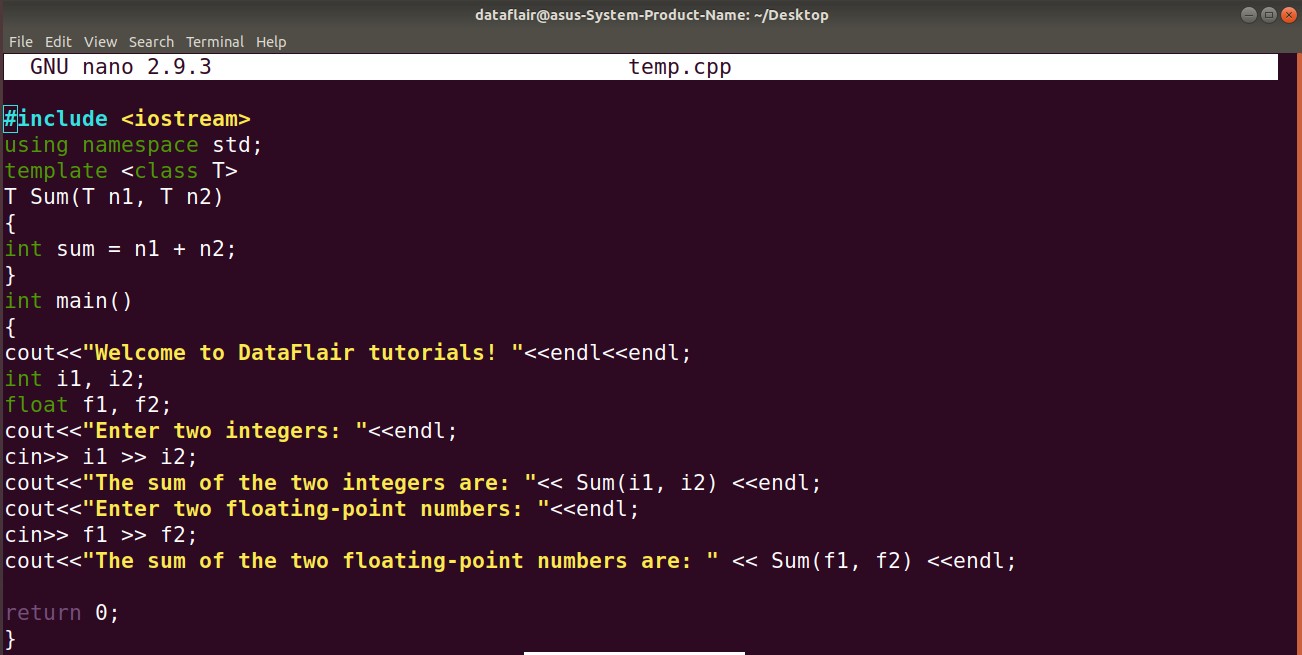
Cpp Template Function
It is returned by member function bitset::size. Consider the case where you want to design.

An introduction to C++ template programming
// generic template vector just like arrays, vectors use contiguous storage locations for their elements,.
HackerRank C++ Class Template Specialization solution
Sometimes, the programmer may decide to implement a special version of a function (or class).
Creating a C++ template in vim in Linux
Template parameters n size of the bitset, in terms of number of bits. C++11 introduced.

1.3 Standard Template Library STL and the game of Hex Coursera
Generic programming is an approach to programming where generic types are used as parameters in.

C++ Class Templates (Part 2) YouTube
It is returned by member function bitset::size. If a primary template is a member of.
The result is a template parameterized on the remaining types. Generic programming is an approach to programming where generic types are used as parameters in algorithms to work for a variety of data types.in c++, a template is a straightforward yet effective tool. A template has multiple types and only some of them need to be specialized. C++11 introduced template aliases, which act like parameterized typedefs. Sometimes, the programmer may decide to implement a special version of a function (or class) for a given set of template type arguments which is called an explicit specialization. Consider the case where you want to design a class that stores 8 objects. Templates in c++ is defined as a blueprint or formula for creating a generic class or a function. A template has only one type, but a specialization is needed for pointer, reference, pointer to member, or function pointer types. For a class that also optimizes for space allocation and allows for dynamic resizing, see the bool specialization of vector (vector). Template parameters n size of the bitset, in terms of number of bits. If a primary template is a member of another class template, its partial specializations are members of the enclosing class template. 19.1 template classes previous post 19.1 — template classes. Explicit specialization may be declared in any scope where its primary template may be defined (which may be different from the scope where the primary template is defined; The following code shows the definition of a template. 19.3 function template specialization back to table of contents.
A Template Has Multiple Types And Only Some Of Them Need To Be Specialized.
Templates in c++ is defined as a blueprint or formula for creating a generic class or a function. The following code shows the definition of a template. For a class that also optimizes for space allocation and allows for dynamic resizing, see the bool specialization of vector (vector). A template has only one type, but a specialization is needed for pointer, reference, pointer to member, or function pointer types.
The Specialization Itself Is Still A Template On The Type Pointed To Or.
Sometimes, The Programmer May Decide To Implement A Special Version Of A Function (Or Class) For A Given Set Of Template Type Arguments Which Is Called An Explicit Specialization.
C++11 introduced template aliases, which act like parameterized typedefs. 19.3 function template specialization back to table of contents. Template < class t, class alloc = allocator > class vector; Generic programming is an approach to programming where generic types are used as parameters in algorithms to work for a variety of data types.in c++, a template is a straightforward yet effective tool.
If A Primary Template Is A Member Of Another Class Template, Its Partial Specializations Are Members Of The Enclosing Class Template.
If the enclosing template is instantiated, the declaration of each member partial specialization is instantiated as well (the same way declarations, but not definitions, of all other members of a template are instantiated). The result is a template parameterized on the remaining types. Explicit specialization may be declared in any scope where its primary template may be defined (which may be different from the scope where the primary template is defined; It is returned by member function bitset::size.