Render Template Flask
Templates are files that contain static data as well as placeholders for dynamic data. The form data received by the triggered function can collect it in the form of a dictionary object and forward it to a template to render it on a corresponding web page. A template is rendered with specific data to produce a final document. In the following example, ‘/’ url renders a web page (student.html) which has a form. To install flask on the system, we need to have python 2.7 or higher installed on our system.
Render Template Flask - The data filled in it is posted to the ‘/result’ url. A template is rendered with specific data to produce a final document. The same operators that you would use in python can be used This increases maintainability, extensionability and portability of your software. All you have to do is provide the name of the template and the variables you want to pass to the template engine as keyword arguments. It is also possible to apply validation to the wtf field. Templates are files that contain static data as well as placeholders for dynamic data. One of the key things to know is, templates are used to separate bussiness logic from presentation logic. In the following example, ‘/’ url renders a web page (student.html) which has a form. Let us see how this dynamic generation of html works.
Render Template Flask Gallery

Bento Specialty Check Flask check Unescaped file extension — by r2c
The data filled in it is posted to the ‘/result’ url. Code vulnerable in a.
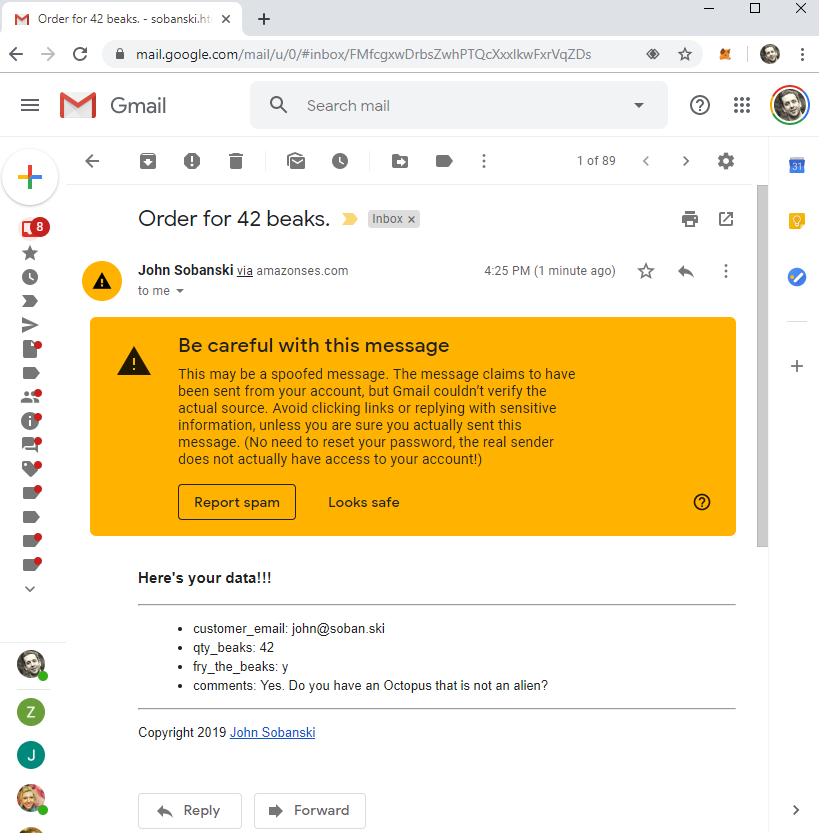
Configure Flask to Send Form Data to Gmail
To render a template you can use the render_template() method. Jinja2 is a web template.
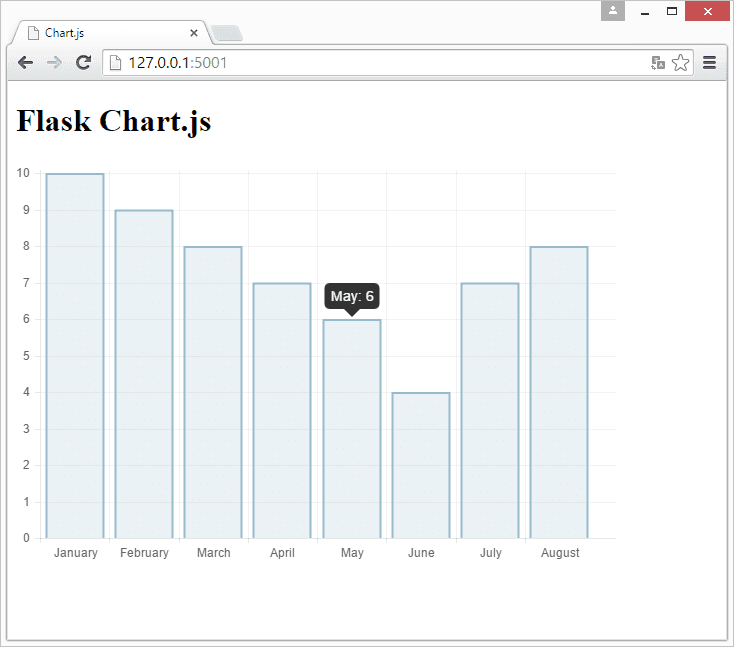
Flask and great looking charts using Chart.js Python Tutorial
In the following example, ‘/’ url renders a web page (student.html) which has a form..
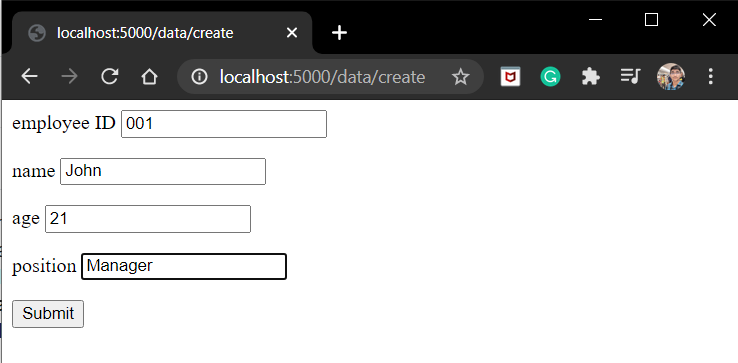
Flask CRUD Application Create, Retrieve, Update, and Delete AskPython
A template is rendered with specific data to produce a final document. The same operators.

Build a Python Web Server with Flask Using HTML Raspberry Pi Projects
To render a template you can use the render_template() method. This increases maintainability, extensionability and.

Building A Machine learning chatbot with flask framework and python
The data filled in it is posted to the ‘/result’ url. Here’s a simple example.
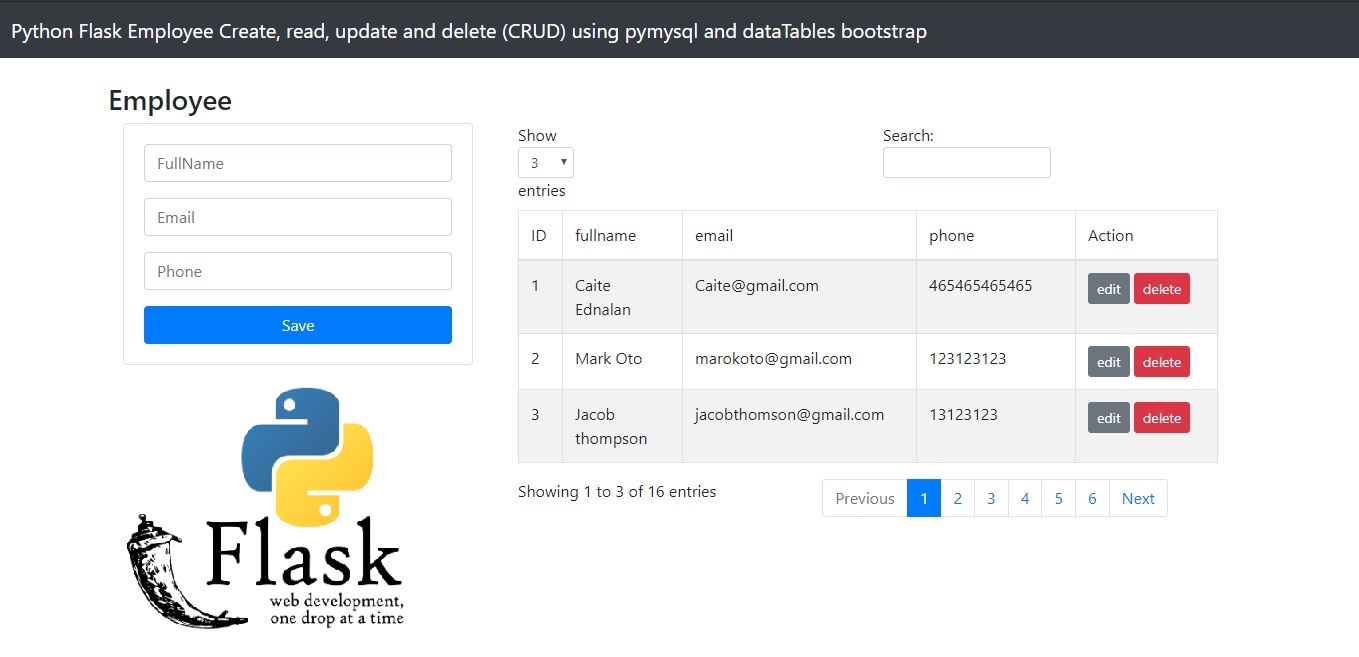
Python Flask Employee Create, read, update and delete (CRUD) using
It is also possible to apply validation to the wtf field. This increases maintainability, extensionability.
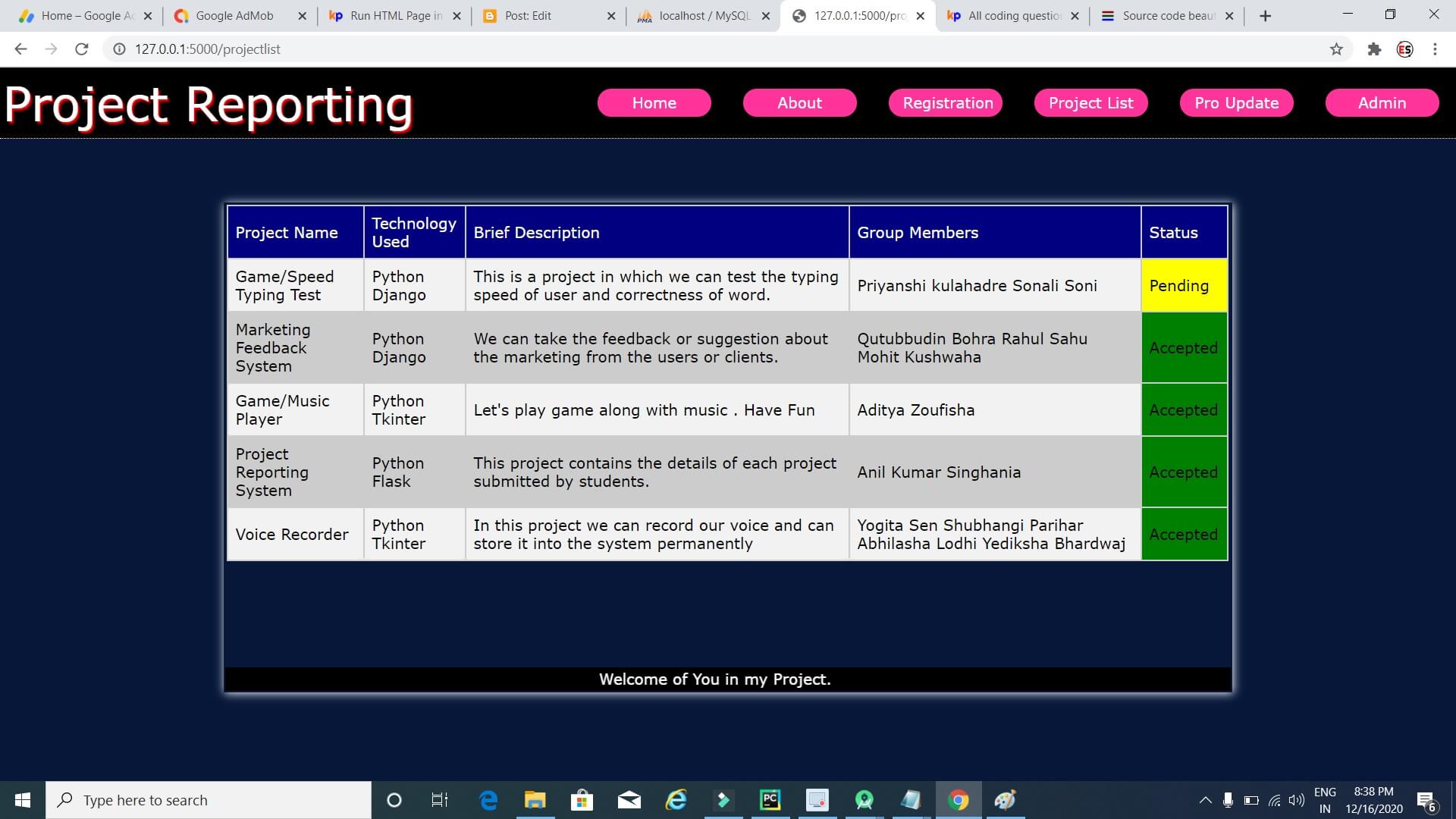
Fetch Data from MySQL using Flask and Python Website in Python
To install flask on the system, we need to have python 2.7 or higher installed.
Here’s a simple example of how to render a template: To render a template you can use the render_template() method. In the following example, ‘/’ url renders a web page (student.html) which has a form. The form data received by the triggered function can collect it in the form of a dictionary object and forward it to a template to render it on a corresponding web page. Because of that flask configures the jinja2 template engine for you automatically. The bootstrap class and bootstrap/ template path are deprecated since 2.0 and will be removed in 3.0. Templates are files that contain static data as well as placeholders for dynamic data. It is also possible to apply validation to the wtf field. The data filled in it is posted to the ‘/result’ url. Code vulnerable in a flask the developer wants to echo back from request get which is named search and render to function call render_template_string it is based on the flask. To install flask on the system, we need to have python 2.7 or higher installed on our system. Jinja2 is a web template engine which combines a template with a certain data source to render the dynamic web pages. You can include if statements in your template. A template is rendered with specific data to produce a final document. The same operators that you would use in python can be used
Because Of That Flask Configures The Jinja2 Template Engine For You Automatically.
To render a template you can use the render_template() method. In the following example, ‘/’ url renders a web page (student.html) which has a form. You can include if statements in your template. A template is rendered with specific data to produce a final document.
To Install Flask On The System, We Need To Have Python 2.7 Or Higher Installed On Our System.
The Form Data Received By The Triggered Function Can Collect It In The Form Of A Dictionary Object And Forward It To A Template To Render It On A Corresponding Web Page.
The same operators that you would use in python can be used Let us see how this dynamic generation of html works. Jinja2 is a web template engine which combines a template with a certain data source to render the dynamic web pages. All you have to do is provide the name of the template and the variables you want to pass to the template engine as keyword arguments.
However, We Suggest Using Python 3 For The Development In The Flask.
The template files will be stored in the templates directory inside the flaskr package. The bootstrap class and bootstrap/ template path are deprecated since 2.0 and will be removed in 3.0. This increases maintainability, extensionability and portability of your software. The data filled in it is posted to the ‘/result’ url.