What Acts As The Template In Dna Replication
Mutations result either from errors in dna replication or from the damaging effects of mutagens, such as chemicals and. After the completion of the dna replication, each dna has one parental (or old) strand and one daughter (or new) strand. Others involve insertion or deletion of one or a few nucleotides. Dna replication initiates at specific points, called origins, where the dna double helix is unwound. The base pairing between dna and rna is not stable enough to maintain the stability of the mrna synthesis components.
What Acts As The Template In Dna Replication - The base pairing between dna and rna is not stable enough to maintain the stability of the mrna synthesis components. After the completion of the dna replication, each dna has one parental (or old) strand and one daughter (or new) strand. A short segment of rna, called a primer, is then synthesized and acts as a starting point for. We can conclude that dna replication is a semiconservative method in which each of the two parental dna strands acts as the template for new dna to be synthesised. Dna replication initiates at specific points, called origins, where the dna double helix is unwound. Instead, the rna polymerase acts as a stable linker between the dna template and the newly forming rna strand to ensure that elongation is not. A mutation (section 14.1) is a change in the nucleotide sequence of a short region of a genome (figure 14.1a).many mutations are point mutations that replace one nucleotide with another; Mutations result either from errors in dna replication or from the damaging effects of mutagens, such as chemicals and. Others involve insertion or deletion of one or a few nucleotides. The dna is rewound behind the core enzyme as the hydrogen bonds are reformed.
What Acts As The Template In Dna Replication Gallery

Adenoassociated virus (AAV) replication cycle and formation of dimeric
A mutation (section 14.1) is a change in the nucleotide sequence of a short region.

Semi Conservative Theory Of Dna Replication SHOTWERK
Mutations result either from errors in dna replication or from the damaging effects of mutagens,.

Genes Free FullText PrimPol—Prime Time to Reprime HTML
Mutations result either from errors in dna replication or from the damaging effects of mutagens,.

DNA & RNA Summary
Dna replication initiates at specific points, called origins, where the dna double helix is unwound..

DNA Polymerase Structure, Functions in Pro and Eukaryotes
We can conclude that dna replication is a semiconservative method in which each of the.
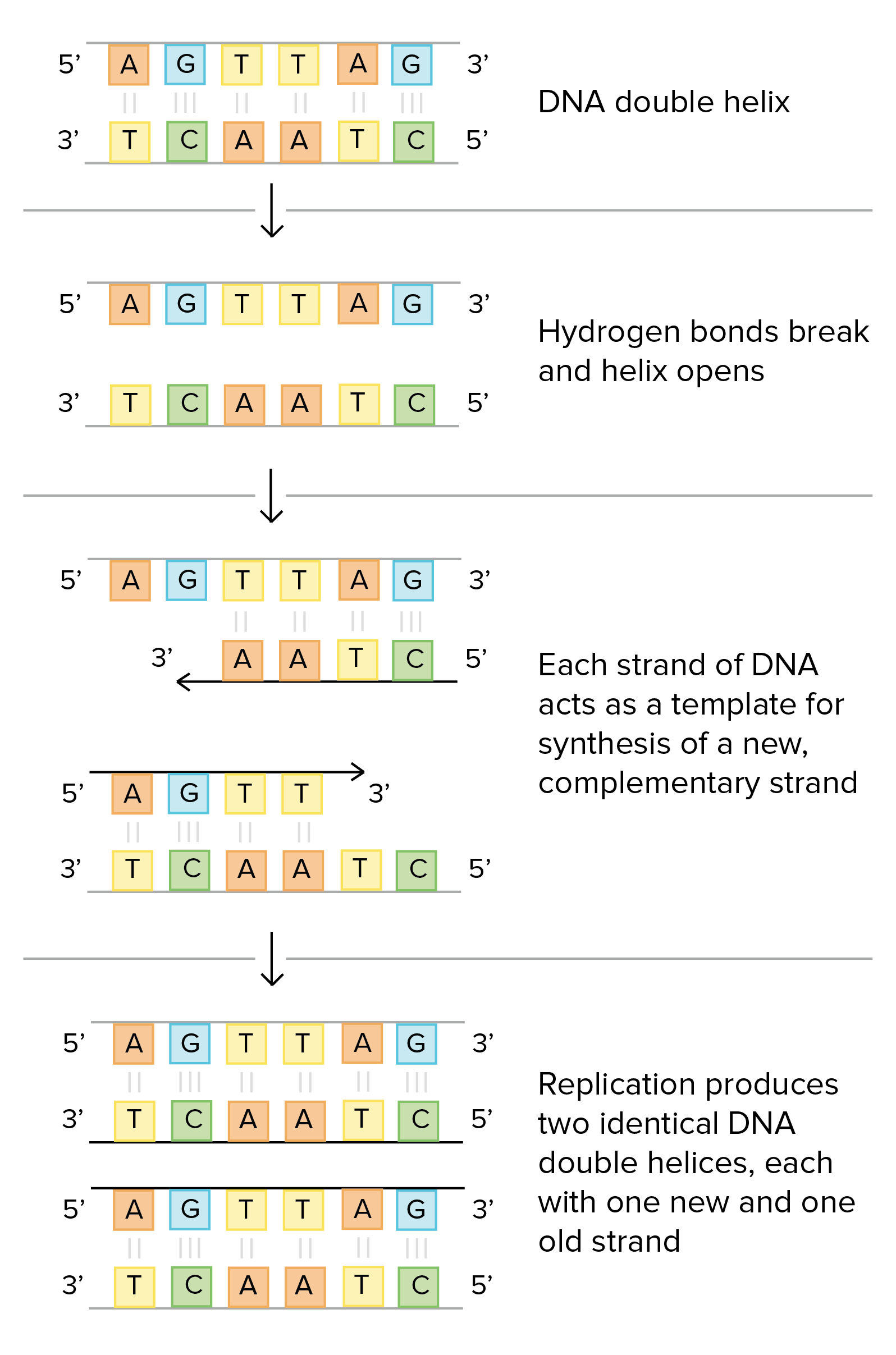
DNA Replication Can Humans liver forever
Mutations result either from errors in dna replication or from the damaging effects of mutagens,.

Why Nature Preferred DNA over RNA? Science Samhita
We can conclude that dna replication is a semiconservative method in which each of the.

Difference Between Replication and Transcription Compare the
We can conclude that dna replication is a semiconservative method in which each of the.
The base pairing between dna and rna is not stable enough to maintain the stability of the mrna synthesis components. A short segment of rna, called a primer, is then synthesized and acts as a starting point for. Dna replication initiates at specific points, called origins, where the dna double helix is unwound. Instead, the rna polymerase acts as a stable linker between the dna template and the newly forming rna strand to ensure that elongation is not. A mutation (section 14.1) is a change in the nucleotide sequence of a short region of a genome (figure 14.1a).many mutations are point mutations that replace one nucleotide with another; We can conclude that dna replication is a semiconservative method in which each of the two parental dna strands acts as the template for new dna to be synthesised. The dna is rewound behind the core enzyme as the hydrogen bonds are reformed. Mutations result either from errors in dna replication or from the damaging effects of mutagens, such as chemicals and. Others involve insertion or deletion of one or a few nucleotides. After the completion of the dna replication, each dna has one parental (or old) strand and one daughter (or new) strand.
After The Completion Of The Dna Replication, Each Dna Has One Parental (Or Old) Strand And One Daughter (Or New) Strand.
We can conclude that dna replication is a semiconservative method in which each of the two parental dna strands acts as the template for new dna to be synthesised. Mutations result either from errors in dna replication or from the damaging effects of mutagens, such as chemicals and. Instead, the rna polymerase acts as a stable linker between the dna template and the newly forming rna strand to ensure that elongation is not. Dna replication initiates at specific points, called origins, where the dna double helix is unwound.